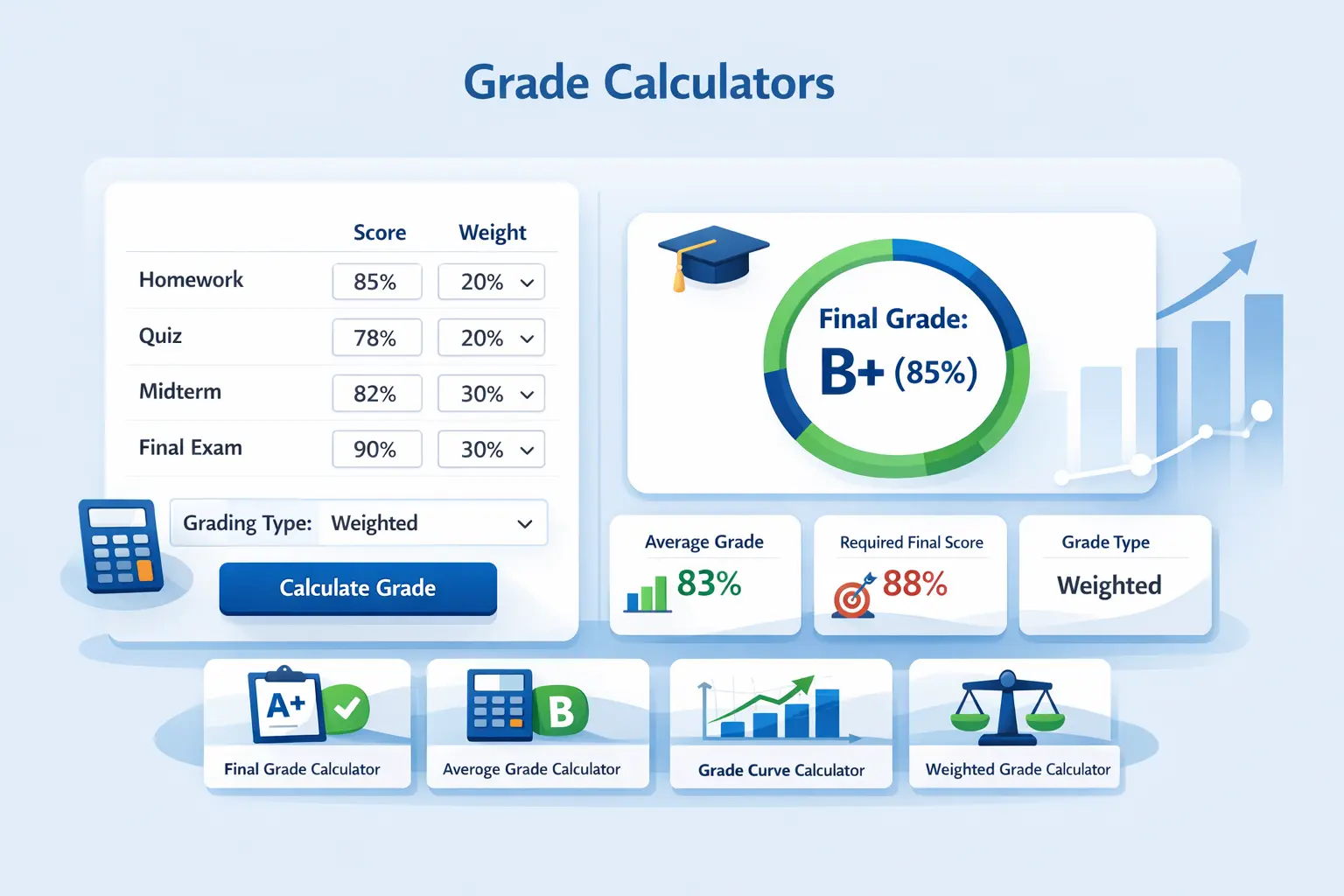
Understanding the Concept of Weighted Grades
In many academic systems, not all assignments, quizzes, and exams contribute equally to a final grade. This is where a weighted grading system comes in. Instead of treating every score the same, each component of a course is assigned a percentage value based on its importance. For example, a final exam might be worth 40% of the total grade, while quizzes might only contribute 10%.
A weighted grade calculator helps students and educators determine the final mark by taking these different weightages into account. It ensures a fair evaluation system where more important assessments have a greater impact on the final result.
How Weighted Grades Work in Practice
To understand weighted grading, imagine a course divided into several parts:
- Assignments: 20%
- Quizzes: 10%
- Midterm Exam: 30%
- Final Exam: 40%
Each section has its own score, but those scores are not simply added together. Instead, each score is multiplied by its assigned weight.
For instance, if a student scores:
- Assignments: 80%
- Quizzes: 90%
- Midterm: 70%
- Final Exam: 85%
The calculation would be:
- Assignments: 80 × 0.20 = 16
- Quizzes: 90 × 0.10 = 9
- Midterm: 70 × 0.30 = 21
- Final Exam: 85 × 0.40 = 34
Adding these together gives a final weighted grade of 80%.
This method provides a more accurate reflection of performance because it considers the importance of each academic component.
Why Students Should Use a Weighted Grade Calculator
Manually calculating weighted grades can be time-consuming and prone to errors, especially when dealing with multiple subjects and complex grading structures. A weighted grade calculator simplifies this process by instantly computing the final score based on input values.
Some key benefits include:
- Time Efficiency: Quickly calculate grades without manual math.
- Accuracy: Reduces human error in calculations.
- Better Planning: Helps students understand what scores they need in future assessments.
- Stress Reduction: Provides clarity about academic standing throughout the semester.
By using a calculator, students can focus more on improving their performance rather than worrying about calculations.
Real-Life Importance of Weighted Grades
Weighted grading systems are widely used in schools, colleges, and universities worldwide. They reflect real-world evaluation systems where not all tasks carry equal importance. For example, in professional environments, a major project often has a greater impact on performance reviews than minor tasks.
Similarly, in education, a final exam is typically more significant than a weekly quiz. This ensures that students are evaluated not just on consistency but also on their ability to perform in high-stakes assessments.
Understanding this system helps students prioritize their study time effectively. They can allocate more effort toward high-weight components, improving their overall academic performance.
How to Use a Weighted Grade Calculator Effectively
Using a weighted grade calculator is simple. Most tools require the following inputs:
- Enter each assignment or exam score.
- Input the weight percentage for each category.
- Click calculate to get the final grade.
Some advanced calculators also allow scenario testing, where students can adjust future scores to see how they will affect the final result. This feature is especially useful during exam preparation.
Final Thoughts
A weighted grade calculator is an essential tool for modern students navigating complex grading systems. It transforms complicated percentage-based evaluations into simple, understandable results. By accurately reflecting the importance of each course component, it provides a clearer picture of academic performance.
Whether you're tracking your progress during the semester or planning your study strategy, understanding and using weighted grades effectively can make a significant difference in achieving your academic goals.